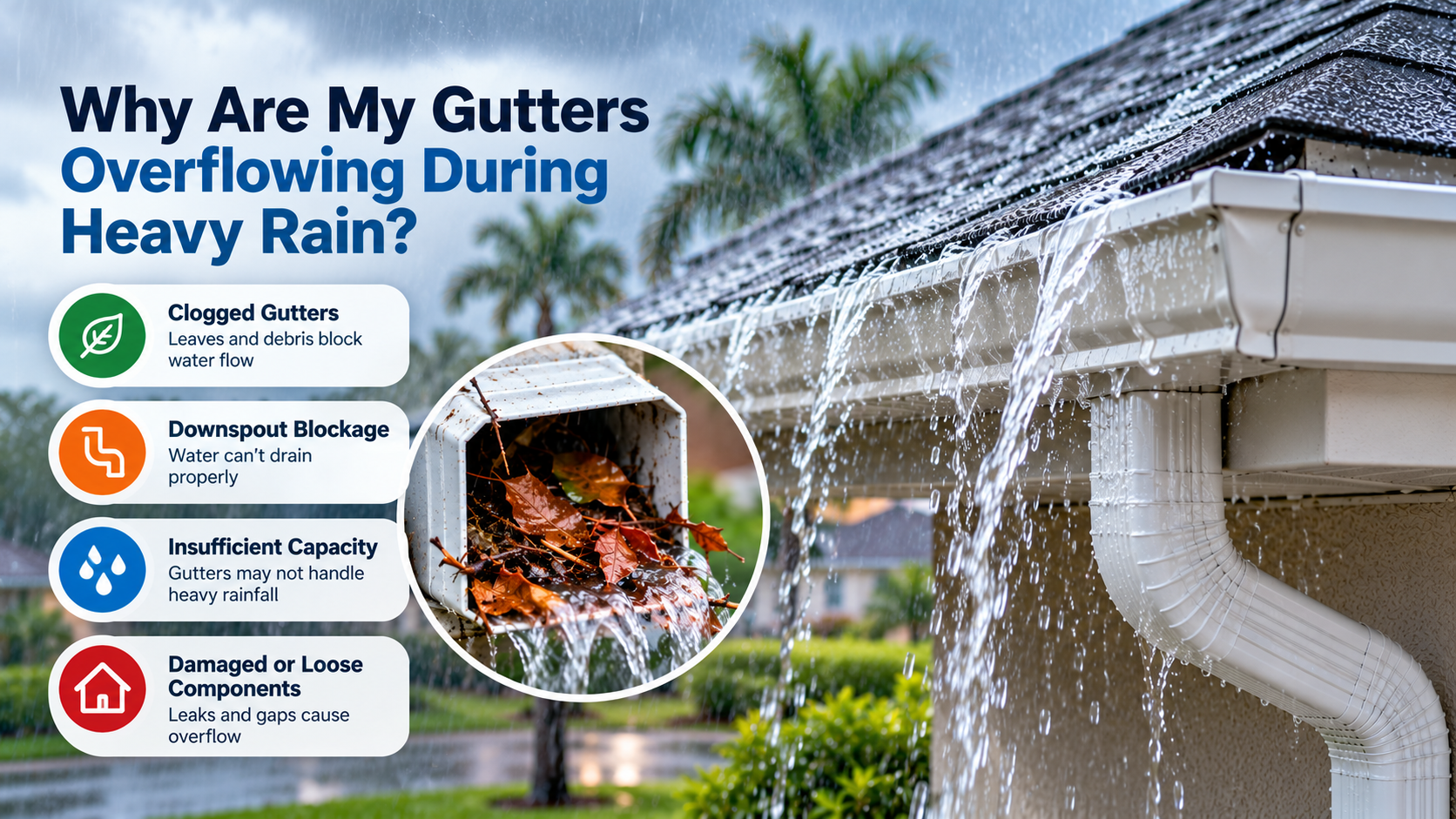
Your gutters play an important role in directing rainwater away from your roofline, exterior walls, and foundation. However, leaves, pine needles, twigs, and other debris can gradually accumulate inside the system, restricting water flow and increasing the risk of overflow during heavy rain.
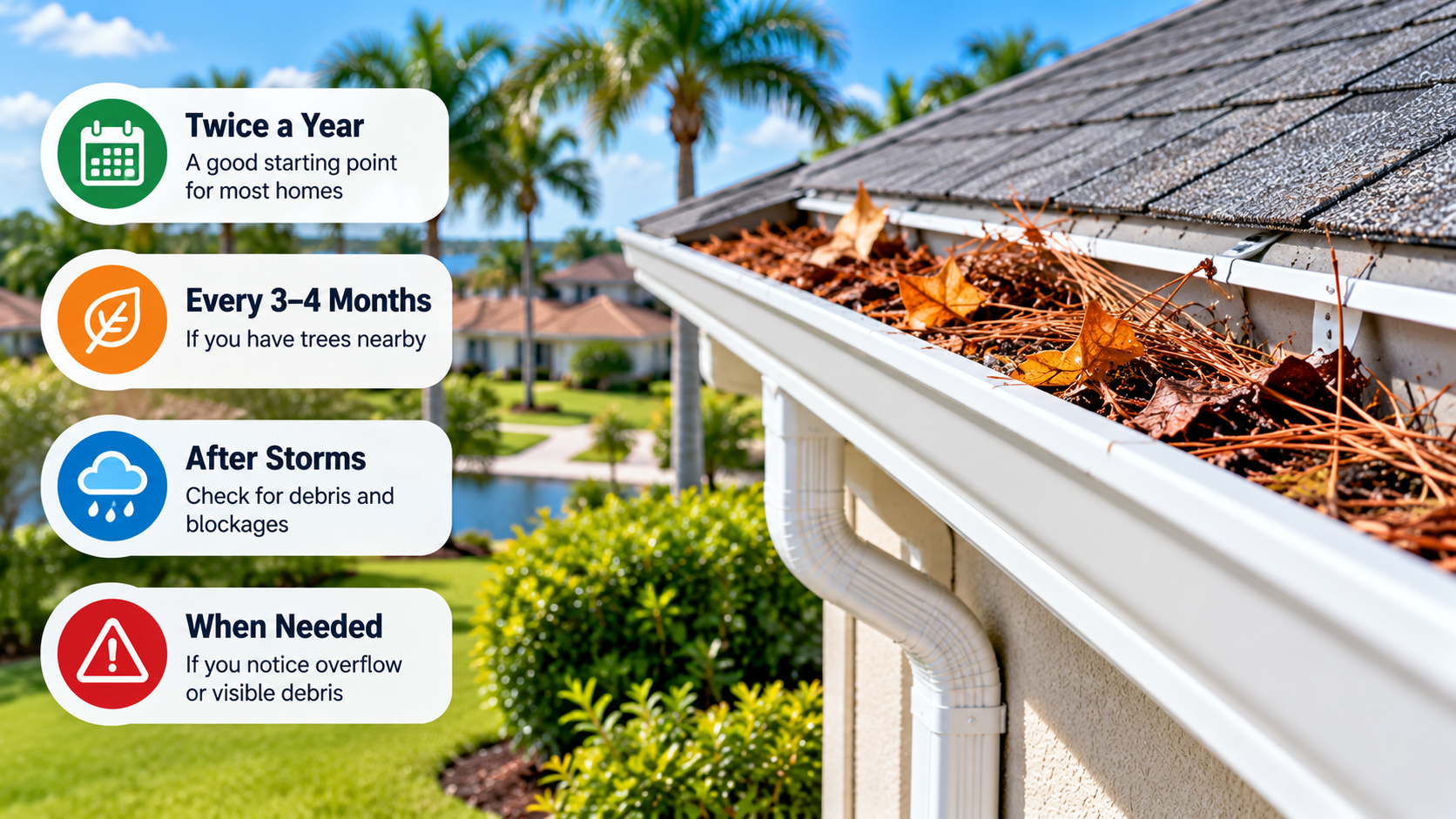
So, how often should you clean your gutters? For many homes, cleaning at least twice a year is a reasonable starting point, but the ideal schedule depends on nearby trees, roof conditions, seasonal debris, and local rainfall.
Homeowners in Flagler County and Volusia County should pay particular attention to gutter maintenance during periods of heavy rain and after trees shed leaves or other debris. Regular inspections can help identify blockages before they contribute to drainage problems.
How Often Should You Clean Your Gutters?
The right gutter cleaning frequency depends on your property’s surroundings and how quickly debris accumulates.
Here is a practical maintenance guide:
- Twice a year: A reasonable starting schedule for homes with relatively little surrounding tree cover.
- Every three to four months: Consider more frequent inspections and cleaning if your property has trees that regularly drop leaves, seeds, or pine needles.
- After severe weather: Inspect your gutters after significant storms or strong winds, especially if branches and debris have fallen nearby.
- More frequently when needed: If you notice overflow, visible blockages, or water spilling from the gutters, inspect the system rather than waiting for your next scheduled cleaning.
These are general guidelines, not a fixed schedule for every home. Checking the gutters periodically will help you determine whether they need attention sooner.
What Factors Affect Gutter Cleaning Frequency?
Several factors determine how quickly gutters become clogged and how often maintenance is necessary.
1. Nearby Trees and Vegetation
Trees can drop leaves, seed pods, twigs, and other organic material onto your roof. Pine needles can also collect inside gutters and accumulate around downspout openings.
Homes surrounded by mature trees may need more frequent cleaning than properties with limited vegetation. Pay attention to the areas directly above the roofline and around gutter corners, where debris can collect.
2. Heavy Rainfall and Storms
Heavy rainfall can reveal existing blockages by causing water to spill over the gutter edges. Strong winds may also deposit branches and other debris onto the roof.
After significant weather events, check for visible obstructions, loose gutter sections, and signs that water is not draining correctly.
3. Roof Design and Gutter Layout
Roof valleys can concentrate rainwater and carry debris toward specific gutter sections. Long gutter runs, corners, and downspout openings may also require closer inspection.
A gutter system that does not drain properly may need more than cleaning. Incorrect slope, damaged components, or inadequate capacity can contribute to recurring problems.
4. Existing Gutter Guards
Gutter guards can help reduce the amount of debris entering a gutter, but they do not eliminate maintenance. Leaves, pine needles, and roof debris may collect on top of the guards or block certain openings.
Inspect the guards and gutter outlets according to the product manufacturer’s recommendations.
What Is the Best Time to Clean Your Gutters?
The best time to clean your gutters is when debris has accumulated and before it interferes with drainage during periods of heavy rainfall.
Before Periods of Frequent Rain
Inspect your gutters before periods when heavy rain is common. Removing accumulated debris helps water move through the system as intended.
After Leaves and Pine Needles Accumulate
If trees around your property shed leaves or pine needles, inspect the gutters after periods of noticeable debris fall. You may need to adjust your cleaning schedule based on how quickly material collects.
After Significant Storms
Check your gutters after strong winds or severe weather. Look for branches, loose sections, detached downspouts, and signs that water is not draining correctly.
Avoid climbing onto a wet or unstable roof. If cleaning requires working at height or near electrical hazards, consider hiring a qualified professional.
5 Signs Your Gutters Need Cleaning
You do not always have to wait until your scheduled maintenance date. These warning signs may indicate that your gutters need attention.
1. Water Overflowing During Rain
If water spills over the gutter edges during rainfall, debris may be restricting the flow. However, overflowing gutters can also result from inadequate capacity, poor slope, or drainage issues.
2. Plants or Thick Debris Inside the Gutters
Visible leaves, twigs, accumulated sediment, or vegetation indicate that debris has been collecting inside the system.
3. Water Pooling Near the House
Water collecting near the foundation or beneath downspouts may indicate that runoff is not being directed effectively. Check the gutters, downspouts, and surrounding ground for possible causes.
4. Sagging or Pulling Gutters
Debris and standing water can add weight to gutter sections. Sagging may also indicate loose fasteners, deteriorated fascia, or installation problems that cleaning alone will not fix.
5. Water Stains on Exterior Walls
Streaks or stains below the roofline may indicate that water is overflowing or escaping from leaking joints. Inspect the affected section to determine whether cleaning, repair, or further assessment is needed.
How to Maintain Your Gutters Between Cleanings
A few simple habits can help you identify gutter problems early and keep your maintenance schedule manageable.
- Inspect visible gutter sections: Look for accumulated debris, loose connections, and sagging areas from a safe location.
- Check downspout outlets: Make sure water can discharge without obvious blockages.
- Observe drainage during rain: From a safe position, check whether water flows through the system or spills over the edges.
- Trim nearby vegetation where appropriate: Reducing overhanging branches may help limit the amount of debris reaching your roof.
- Arrange repairs when needed: Loose fasteners, leaking joints, and damaged sections should be assessed rather than repeatedly cleaned without addressing the underlying issue.
Do not attempt to clean gutters from an unstable ladder or during wet, windy conditions. Professional assistance may be the safer option for difficult-to-reach rooflines.
When Is Gutter Cleaning No Longer Enough?
Cleaning removes debris, but it cannot correct every gutter problem. If your gutters repeatedly overflow despite being clear, pull away from the roofline, leak at multiple joints, or show extensive damage, the system may require repair or replacement.
A professional assessment can help determine whether the issue involves blockages, gutter slope, downspout placement, or the condition and capacity of the existing system.
For example, homeowners dealing with persistent gutter problems may need to review the condition of their existing system and consider whether a replacement is appropriate. Property owners can learn more about gutter installation in Palm Coast when exploring options for a new gutter system.
The same consideration applies to homes in Volusia County, where damaged gutters or recurring overflow may warrant a closer look at the installation. Homeowners can learn about gutter installation in Ormond Beach as part of evaluating their options.
For properties where roof runoff is not being collected or directed effectively, a properly planned gutter system can help manage rainwater around the home. Residents can explore gutter installation in Port Orange to learn about local installation services.
Likewise, homeowners experiencing recurring gutter issues in the southern part of Volusia County can review options for gutter installation in Edgewater when considering whether a new system may better suit their property.
Conclusion
For many homes, cleaning gutters twice a year is a useful starting point, but properties with trees, frequent debris accumulation, or recurring drainage problems may need more frequent attention. Inspecting your gutters after significant storms and watching for signs of overflow can help you identify issues before they become more serious.
If your existing gutters are damaged, sagging, or no longer directing rainwater effectively, a new system may be worth considering. Get Well Hung LLC provides gutter installation services in Flagler County and Volusia County. To discuss your home’s gutter needs, contact Get Well Hung at (386) 444-5817.