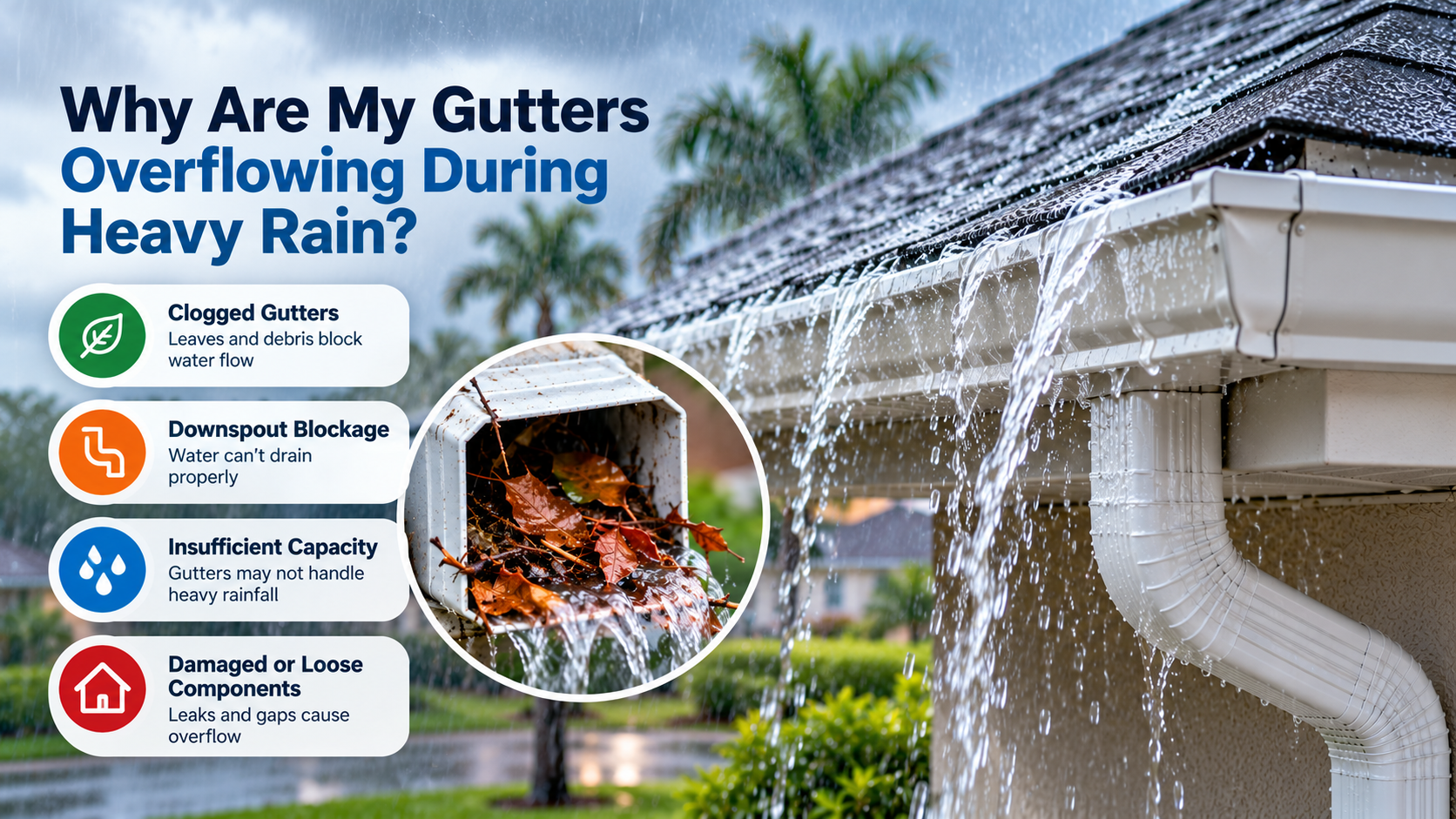
When gutters are overflowing during heavy rain, it usually means water cannot move through the drainage system quickly enough. Rainwater may spill over the edges, run down exterior walls, or collect near the house instead of flowing through the downspouts and away from the foundation.
Common causes include clogged gutters, blocked downspouts, incorrect gutter slope, damaged components, and insufficient gutter capacity. In some cases, the system may struggle to handle the volume of water flowing off the roof during intense rainfall.
For homeowners in Flagler County and Volusia County, identifying the cause of gutter overflow is an important first step toward protecting exterior surfaces and managing roof runoff. The right solution depends on whether the issue requires cleaning, repairs, or a closer assessment of the existing gutter system.
6 Common Gutter Overflow Causes
Understanding why your gutters overflow can help you identify what needs attention. Here are six common causes to consider.
1. Clogged Gutters
Leaves, pine needles, twigs, roof granules, and other debris can gradually accumulate inside gutters. As this material builds up, it restricts the space available for rainwater to flow.
During light rainfall, water may still pass through the system. However, heavy rain can quickly overwhelm a partially blocked gutter, causing water to spill over the edges.
What to check: Look for visible debris or standing water from a safe location. If the gutters are clogged, cleaning may restore normal flow. Properties with frequent debris buildup may also need more regular maintenance.
2. Downspout Blockage
Downspouts carry collected rainwater from the gutters toward the ground-level drainage area. If a downspout opening or the pipe itself becomes blocked, water may back up into the gutter.
This can cause overflow even when the rest of the gutter appears relatively clear.
What to check: Look for debris around the downspout entrance and observe whether water exits the outlet during rainfall. A blockage may need to be cleared before the system can drain effectively.
3. Incorrect Gutter Slope
Gutters need an appropriate slope to direct water toward their downspouts. If a section has an incorrect slope or has shifted over time, water may collect in low spots instead of draining properly.
Standing water can contribute to debris accumulation and increase the risk of overflow during heavy rainfall.
What to check: Look for sections that appear to sag or hold water. Adjusting the slope or securing loose sections may resolve the problem, depending on the condition of the existing system.
4. Insufficient Gutter Capacity
Not every gutter system can handle the same volume of roof runoff. Gutter size, roof area, roof pitch, rainfall intensity, and the number and placement of downspouts can all affect drainage performance.
If the system cannot collect and carry water quickly enough during intense rainfall, it may overflow even when it is relatively clean.
What to check: Notice whether overflow repeatedly occurs during heavy rain despite clear gutters and downspouts. A professional assessment can help determine whether the system’s capacity and layout are suitable for the roof.
5. Damaged Gutters or Loose Connections
Cracks, leaking joints, separated sections, and loose fasteners can affect how effectively gutters collect and direct water. Damaged sections may release water before it reaches the downspouts, while sagging areas can interfere with drainage.
Overflow is not always caused by a blockage; sometimes the system itself needs repair.
What to check: Look for water escaping from joints, gaps between sections, loose brackets, or gutters pulling away from the roofline. The affected area may need repair or replacement depending on the extent of the damage.
6. Heavy Rainfall Exceeding Drainage Capacity
During intense storms, a large volume of water can reach the roof in a short period. Even a functioning gutter system may struggle if rainfall exceeds its drainage capacity or if several sections are already restricted.
If overflow happens only during exceptionally heavy rainfall, the system may need an assessment to determine whether its design, layout, or capacity is appropriate.
How to Identify the Cause of Overflowing Gutters
The location and pattern of the overflow can provide useful clues. Although these observations cannot confirm the cause on their own, they can help you decide what to inspect.
| What you notice | Possible cause |
| Water spilling over one section | Debris buildup, a local slope issue, or concentrated roof runoff |
| Water backing up near a downspout | Possible downspout blockage |
| Water pooling in the gutter after rain | Incorrect slope, sagging, or restricted drainage |
| Water leaking from joints | Loose connections, damaged seals, or deteriorated components |
| Overflow along several gutter sections | Heavy runoff, insufficient capacity, or multiple drainage restrictions |
| Overflow continues after cleaning | Possible slope, layout, downspout, damage, or capacity issue |
If your gutters repeatedly overflow in Palm Coast, check for visible debris and signs of poor drainage. If cleaning does not resolve the problem, a professional assessment can help determine whether repairs or a new system may be appropriate. Learn more about our gutter installation services in Palm Coast, FL.
What Should You Do When Gutters Overflow During Heavy Rain?
If you notice overflowing gutters, focus on safe observations and simple checks before deciding what work may be necessary.
1. Observe Where the Water Is Spilling
From a safe position, note whether water is overflowing at one corner, near a downspout, or along a longer section of the roofline. This information can help narrow down the possible causes.
Avoid going onto the roof or using a ladder during rainfall or strong winds.
2. Check for Visible Debris After the Rain
Once conditions are safe, inspect accessible areas for leaves, pine needles, and other material that may be restricting water flow. Check around downspout openings as well.
If the gutters are difficult to reach, consider professional cleaning rather than attempting the work from an unstable ladder.
3. Check Where Downspouts Discharge
Make sure the downspouts direct water away from the immediate area around the house. An obstructed outlet or poorly directed discharge can contribute to water collecting near the foundation.
If water is pooling near the house, assess the surrounding drainage as well as the gutter system.
4. Arrange an Inspection if the Cause Is Unclear
If you cannot identify the source of the overflow or notice sagging, leaks, or separated sections, have the affected area assessed before attempting major repairs.
For homeowners in Ormond Beach, an inspection can help identify whether the issue involves a blockage, loose components, drainage layout, or another problem. If a new system is recommended, explore our gutter installation services in Ormond Beach, FL.
How Can You Prevent Gutter Drainage Problems?
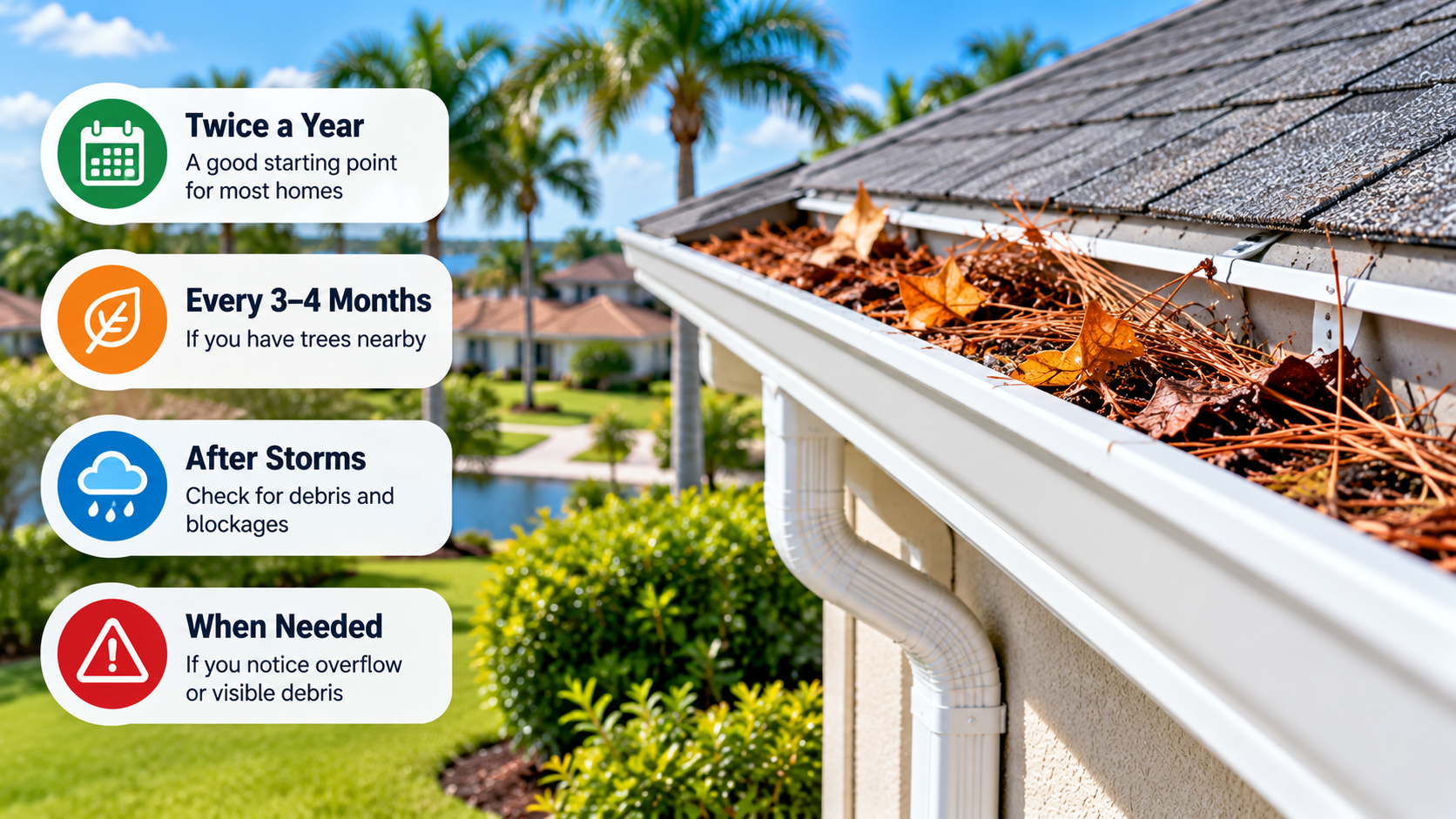
Regular inspections and maintenance can help reduce the risk of overflowing gutters and identify problems before they become more serious.
- Clean gutters regularly: Remove accumulated leaves, pine needles, and other debris before they restrict water flow.
- Inspect after significant storms: Check for fallen branches, loose sections, and visible obstructions once conditions are safe.
- Keep downspout openings clear: Check for debris that could prevent water from draining.
- Look for sagging or leaks: Damaged sections and loose connections should be assessed promptly.
- Review the system’s layout when necessary: Roof runoff, gutter dimensions, slope, and downspout placement can affect overall performance.
If you experience recurring gutter overflow in Port Orange, consider having the system inspected to identify the underlying problem. If replacement is necessary, explore our gutter installation services in Port Orange, FL.
Do Overflowing Gutters Need to Be Replaced?
No. Overflowing gutters do not automatically need replacement. The appropriate solution depends on the cause of the problem and the condition of the existing system.
Cleaning may be sufficient when debris is restricting the flow. A blocked downspout may only need to be cleared, while loose fasteners, leaking joints, or minor slope issues may be repairable.
Replacement may be worth considering when gutters are extensively damaged, repeatedly fail to drain properly despite maintenance, or lack the capacity or layout needed to manage the roof’s runoff. A professional assessment can help determine whether the existing system can be repaired or whether a new installation would be more suitable.
If your gutters continue to overflow in Edgewater despite regular maintenance, the system may need a closer assessment. If it is damaged beyond practical repair or unsuitable for your home’s drainage needs, consider our gutter installation services in Edgewater, FL.
Conclusion
Gutters overflowing during heavy rain can indicate anything from a simple blockage to a problem with slope, downspout drainage, gutter capacity, or damaged components. Identifying the cause is the first step toward choosing the right solution.
Regular cleaning and inspections can help prevent common gutter drainage problems. When overflow occurs, observing where the water spills and checking for visible damage can help guide the next step. Cleaning, repairs, or replacement may be appropriate depending on the findings.
Get Well Hung LLC provides gutter installation services in Palm Coast, Ormond Beach, Port Orange, and Edgewater. If your current gutters are no longer managing roof runoff effectively, contact the team at (386) 444-5817 to discuss your gutter installation needs.