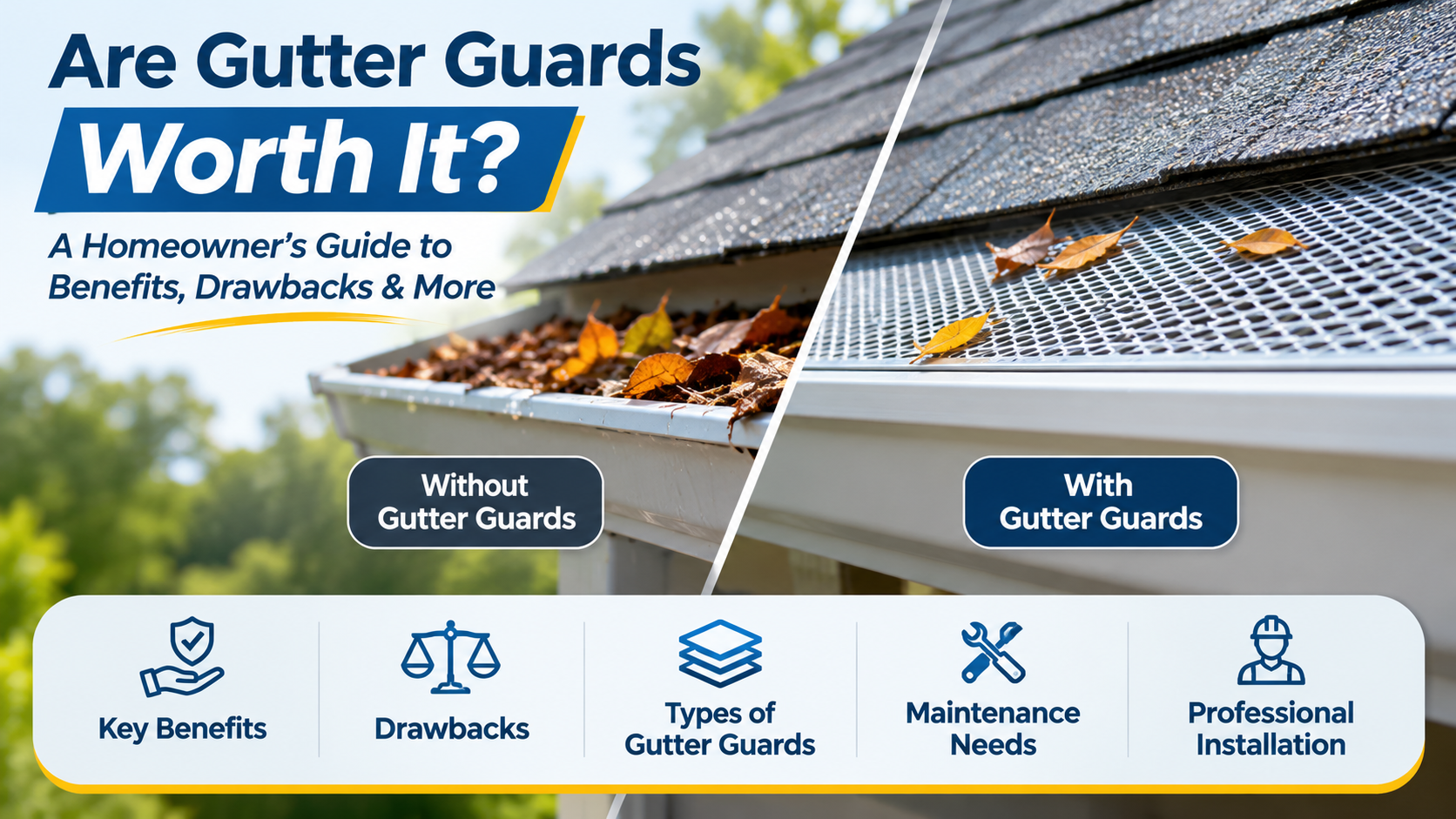
Gutters play an important role in directing rainwater away from your roof, siding, foundation, and landscaping. However, in Florida, frequent rainfall, mature trees, falling leaves, pine needles, and other outdoor debris can make gutter maintenance a recurring concern for homeowners.
Gutter guards are designed to help reduce the amount of debris entering a gutter system. Depending on the design and conditions around your property, they can make gutter maintenance more manageable and reduce the frequency of cleaning.
But do gutter guards work in Florida’s climate, where heavy rain and year-round vegetation can put gutter systems to the test?
The answer depends on the type of guard, the surrounding trees, the condition of the existing gutters, and how well the system is installed and maintained.
Understanding the benefits and limitations of gutter guards can help you decide whether they are a suitable option for your home.
Do Gutter Guards Work in Florida?
Yes, gutter guards can be useful for Florida homes when the right system is selected and installed correctly. They are designed to limit the entry of leaves, twigs, and other debris while allowing rainwater to flow into the gutters.
However, their effectiveness varies according to the product and the property’s conditions.
Important factors to consider include:
- The type and quality of the gutter guard
- The amount and type of debris around your property
- The condition and capacity of the existing gutters
- The slope and alignment of the gutter system
- The intensity of rainfall
- The condition of downspouts and drainage outlets
For example, a home surrounded by mature trees may benefit from a guard designed to manage the specific leaf or needle debris common around the property. A home exposed to intense rainfall also needs a gutter system capable of handling the expected water flow.
The goal is to limit debris entering the gutters and make maintenance more manageable, rather than eliminate every possible blockage.
Why Gutter Guards Can Be Useful for Florida Homes
Florida’s climate creates several challenges for residential gutter systems. When the right guard is selected, it can help address some of these concerns.
1. They Help Reduce Leaf Buildup
Leaves are a common cause of clogged gutters. When they accumulate inside a gutter, they can restrict water movement and interfere with drainage.
Gutter guards create a barrier that helps keep larger leaves out of the gutter channel. This can be particularly useful for properties with mature oak trees, palms, and other vegetation near the roofline.
Although some leaves may remain on top of the guards, limiting the amount of debris entering the gutter can make maintenance easier.
2. They Help Limit Debris Entering the Gutter System
Leaves are not the only material that can collect in gutters. Pine needles, seed pods, small twigs, and other organic debris can also accumulate inside the channel.
Different gutter guard designs handle different debris types. Some are better suited to larger leaves, while others use finer openings to limit smaller particles.
Before choosing a guard, consider the trees and vegetation around your property rather than selecting a product based on appearance alone.
3. They Can Reduce the Frequency of Gutter Cleaning
Gutter guards can reduce the amount of debris entering the gutter system, potentially reducing how often the gutters need to be cleaned.
The actual maintenance savings depend on the guard design, installation quality, surrounding vegetation, and the amount of debris around the home.
For properties that regularly experience clogged gutters, this reduction in debris can be a practical advantage.
4. They Support More Consistent Rainwater Drainage
Gutters collect roof runoff and direct it toward downspouts. When debris blocks the channel, water may overflow over the gutter edge instead of following the intended drainage route.
By helping limit debris buildup, properly selected gutter guards can support more consistent water movement through the system.
However, the gutter itself must still be correctly sized, positioned, and connected to suitable downspouts.
5. They Can Reduce Certain Gutter Maintenance Risks
Cleaning gutters often involves ladders and working near roof edges. For homeowners with difficult roof access, reducing the frequency of gutter cleaning may help limit how often they need to perform this potentially hazardous task.
Gutter guards still require inspection and occasional cleaning, so safe access and appropriate maintenance remain important.
What Are the Limitations of Gutter Guards in Florida?
Although gutter guards offer practical benefits, they are not maintenance-free and may not perform equally well under every condition.
Understanding their limitations before installation can help you set realistic expectations.
1. Fine Debris Can Still Enter Some Guards
Not all gutter guards have the same opening size or filtration design. Small particles, roof grit, pine needles, and organic material may pass through certain products or collect around their openings.
If your property has pine trees or vegetation that produces fine debris, select a guard designed for those conditions.
Even with a suitable product, periodic inspection is important because no design prevents every type of debris from entering the system.
2. Debris Can Accumulate on Top of the Guards
Gutter guards limit debris entering the gutter, but they do not prevent leaves and twigs from landing on the roofline.
Over time, debris can collect on the guard surface and restrict water entry, depending on the design and the amount of buildup.
This is particularly relevant after periods of heavy leaf fall or storms.
3. Heavy Rain Can Challenge Poorly Designed Systems
Florida homes can experience intense rainfall. During heavy downpours, water must enter the gutter efficiently and move through the channel and downspouts without unnecessary restrictions.
A guard that is poorly matched to the roof, gutter size, or expected water flow may contribute to water spilling over the edge.
Overflow can also result from undersized gutters, incorrect slope, blocked downspouts, or inadequate drainage outlets. These issues require separate attention.
4. Existing Gutter Problems Must Be Addressed First
Gutter guards are not a substitute for repairing damaged or poorly functioning gutters.
Before installation, check for:
- Sagging or detached gutter sections
- Loose brackets and fasteners
- Rust, cracks, or damaged seams
- Incorrect gutter slope
- Blocked downspouts
- Water pooling near the foundation
- Signs of recurring overflow
If the existing system has these problems, repairs or replacement may be needed before adding gutter protection.
5. Installation Quality Affects Performance
A gutter guard must fit the gutter system properly and work with the roofline. Poorly fitted sections, gaps, incorrect positioning, or unsuitable installation methods can reduce effectiveness.
The guard should be selected according to the gutter profile, roof configuration, debris exposure, and drainage requirements.
A professional assessment can help determine whether your current gutters are suitable for guards or whether improvements are needed first.
What Types of Gutter Guards Are Suitable for Florida Homes?
Different gutter guard designs offer different levels of debris protection and water flow. The best option depends on your roof, surrounding trees, gutter configuration, and maintenance expectations.
1. Mesh Gutter Guards
Mesh guards use a screen-like surface with openings designed to allow water through while limiting debris entry.
Depending on the opening size and design, they can help manage leaves and certain smaller debris. Fine particles may still collect on the surface or pass through some products.
Mesh guards are worth considering when you need a balance between debris filtration and rainwater flow.
2. Micro-Mesh Gutter Guards
Micro-mesh systems use a finer screen to limit the entry of smaller debris.
They may be useful for homes exposed to small leaves, seeds, or pine needles, depending on the product’s specifications. However, fine material can still collect on the surface, and the system needs appropriate maintenance.
Check the manufacturer’s guidance on debris compatibility, cleaning requirements, and installation suitability before choosing a product.
3. Perforated Gutter Covers
Perforated covers use openings in a solid or semi-rigid surface to allow rainwater to enter the gutter.
They can help keep larger leaves and twigs out of the channel, but smaller debris may still pass through the openings or collect on top.
Their performance depends on the opening pattern, installation, rainfall conditions, and surrounding vegetation.
4. Brush or Foam Inserts
Brush and foam-style products fit inside the gutter channel and are designed to reduce the amount of debris that settles within the gutter.
These products vary in how they handle fine debris, organic buildup, and water flow. Material may accumulate within or around the insert, depending on the design and environmental conditions.
Review the product’s maintenance requirements carefully before installation.
Important: No gutter guard type is ideal for every Florida home. Compare the design, debris compatibility, expected rainfall performance, installation requirements, and ongoing maintenance before making a decision.
Do Gutter Guards Prevent All Gutter Clogs?
No. Gutter guards can reduce the amount of debris entering gutters, but they cannot guarantee a completely clog-free system.
Debris may collect on top of the guards, smaller material can enter certain designs, and downspouts can become blocked independently of the gutter cover.
A gutter system can also overflow because of poor slope, insufficient capacity, damaged sections, or drainage problems.
If you notice water spilling over the gutter edge during rainfall, investigate the cause rather than assuming the guards are working properly.
How to Maintain Gutter Guards in Florida
Regular maintenance helps gutter guards continue performing as intended. The right inspection schedule depends on the amount of debris around your home and the type of guard installed.
1. Inspect the Guards Periodically
Check the gutter guards from a safe location for visible debris, displaced sections, or signs of damage.
Homes surrounded by mature trees may need more frequent inspections than properties with limited vegetation nearby.
2. Remove Debris from the Surface
Leaves, twigs, seed pods, and other material can accumulate on top of the guards.
Remove visible buildup using a safe method appropriate for the product. Follow the manufacturer’s cleaning recommendations to avoid damaging the guard or gutter.
3. Check Downspouts and Drainage
Downspouts and drainage outlets should be checked to ensure water can leave the gutter system properly.
If water backs up or overflows during rainfall, a blockage or drainage issue may need further investigation.
4. Inspect After Major Storms
Strong winds and storms can leave additional leaves, branches, and other debris around the roofline.
After significant weather, check the system from the ground or another safe location. If you notice loose guards, damaged gutters, or recurring overflow, arrange an appropriate inspection.
Do not climb onto a roof or use a ladder in unsafe conditions to inspect or clean the system.
5. Schedule Cleaning When Needed
The frequency of cleaning depends on the guard design, tree coverage, debris levels, and how well water flows through the system.
Rather than relying only on a fixed calendar, monitor the system’s condition and arrange maintenance when buildup or drainage problems appear.
Are Gutter Guards Worth the Investment in Florida?
Gutter guards may be a worthwhile investment for homeowners who regularly deal with leaves and other debris entering their gutters.
Their value depends on the property’s conditions, the selected product, installation costs, and the maintenance still required.
Gutter guards may be worth considering if:
- Your home is surrounded by trees.
- Leaves or pine needles frequently clog your gutters.
- You want to reduce the frequency of gutter cleaning.
- Your existing gutters are in suitable condition.
- You are prepared to inspect and maintain the guards periodically.
They may offer less benefit if your gutters rarely collect debris or if the main problem is inadequate gutter capacity, poor slope, damaged sections, or blocked downspouts.
Before investing, assess your current gutter system and identify the problem you want the guards to solve.
When Should You Consider Professional Gutter Services?
Professional assistance may be useful when installing a new gutter system, adding gutter guards to existing gutters, or dealing with recurring drainage issues.
Consider an assessment if:
- Your gutters overflow during heavy rain.
- Debris regularly blocks your gutter channels.
- Your existing gutters are sagging or damaged.
- Downspouts do not drain water effectively.
- You are unsure which gutter guard design suits your property.
- Your roofline is difficult or unsafe to access.
An assessment can help identify whether the problem is related to debris, gutter sizing, installation, or drainage.
If the gutters are damaged or incorrectly positioned, correcting those issues before installing guards can help prevent investing in a product that does not address the underlying concern.
Gutter Services in Central Florida
Gutter guards can be a useful option for managing debris, particularly for homes surrounded by trees. Choosing the right system starts with understanding your property’s drainage needs and the condition of your existing gutters.
Get Well Hung provides gutter services in Central Florida, including gutter installation and gutter protection options. Explore the local pages below to learn more about available services in your area.
- Gutter Installation in Orlando, FL
- Gutter Installation in DeBary, FL
- Gutter Installation in New Smyrna Beach, FL
For information about gutter guard availability and suitable options for your property, contact Get Well Hung directly.
Conclusion
Gutter guards can help Florida homeowners reduce debris entering their gutters and make routine maintenance more manageable. Their effectiveness depends on the guard design, the property’s surroundings, and the condition of the gutter system.
Before choosing a system, consider the types of debris around your home, the amount of rainfall your gutters must handle, and the maintenance the product requires.
Get Well Hung LLC provides gutter services throughout Central Florida. Explore the local service pages above or contact the team to discuss gutter solutions for your home.
To learn more about our gutter installation and gutter guard services or discuss your home’s gutter protection needs in Central Florida, contact Get Well Hung at (386) 444-5817.