Florida is known for its sunshine, heavy rain, humidity, and changing weather conditions. While rain can help rinse some dust and loose debris from solar panels, it does not always leave them completely clean.
Pollen, bird droppings, leaves, water spots, and other buildup can remain on the panels even after a rainstorm. Over time, this buildup may affect the amount of sunlight reaching the panel surface.
So, does rain actually clean solar panels? The answer depends on the type and amount of dirt left behind. Understanding how Florida weather affects solar panels can help homeowners recognize when inspection or cleaning may be necessary.
Does Rain Actually Clean Solar Panels?
Rain can provide a natural rinse for solar panels. It may wash away some loose dust and surface dirt, especially during a heavier rainfall.
However, rain is not the same as a thorough solar panel cleaning. Some types of buildup can remain attached to the panel surface even after several storms.
For example, rain may not completely remove:
- Pollen and fine particles
- Bird droppings
- Leaves and organic debris
- Dried dirt and residue
- Water spots
- Buildup around panel edges
This means rain can help keep panels somewhat cleaner, but homeowners should still pay attention to their actual condition.
Why Rain Does Not Remove All Solar Panel Dirt
Different types of debris react differently to rain. Some are easily rinsed away, while others can stick to the panel surface.
Loose Dust
Light dust and loose dirt are among the easiest types of debris for rain to remove. A strong rainfall can rinse some of this material from the surface.
However, dust can build up again during dry periods, particularly when there is wind or nearby construction, roads, or landscaping activity.
Pollen
Florida’s warm climate can contribute to pollen buildup during periods of increased plant activity.
Pollen can settle on solar panels and form a thin layer that may not disappear completely with rainfall. Repeated accumulation can leave a noticeable film on the panel surface.
Bird Droppings
Bird droppings can stick firmly to solar panels. Rain may soften or partially remove them, but it does not always wash away all of the residue.
Because bird droppings can create localized buildup, they may require attention even when the rest of the panel surface appears relatively clean.
Leaves and Organic Debris
Homes near trees may experience more leaves, small branches, seeds, and other organic debris on or around solar panels.
Rain can move some debris, but it may also leave material behind or cause it to collect in certain areas of the array.
Why Florida Rain Does Not Mean Your Panels Stay Clean
Florida receives regular rainfall, but the amount and frequency of rain can vary throughout the year. There may also be periods of dry weather when dust and pollen gradually accumulate.
As rainwater dries, particles and contaminants left on the panel surface can sometimes contribute to visible spots or residue. Repeated cycles of dirt, rain, and drying may make this buildup more noticeable over time.
Local weather and environmental conditions can influence how quickly solar panels collect dirt and debris. Homes surrounded by trees, roads, construction, or other sources of airborne particles may experience more buildup than homes in cleaner surroundings.
Can Rain Leave Water Spots on Solar Panels?
Yes. Rainwater can leave spots or streaks after it dries.
When water evaporates, particles already present on the panel or carried by the water can remain behind. If this happens repeatedly, the panel surface may develop noticeable water spots or residue.
A few small spots may not be a major concern, but widespread buildup can indicate that the panels need closer inspection.
How Florida Weather Can Affect Solar Panel Cleaning
Florida’s weather can influence how frequently solar panels need to be checked or cleaned.
Rain
Rain can remove some loose dirt but may leave behind pollen, bird droppings, and other residue.
Wind
Strong winds can carry dust, pollen, leaves, and other particles onto solar panels.
Storms
Heavy storms can bring leaves, branches, dirt, and other debris onto or around a solar panel system.
Humidity
Florida’s humid conditions can contribute to moisture remaining on outdoor surfaces. Combined with airborne particles and organic material, this can contribute to visible environmental buildup.
Sunshine and Heat
Sunlight and heat can dry rainwater on the panel surface, potentially leaving behind spots or residue from particles that remain after the water evaporates.
Because weather conditions vary, there is no single cleaning schedule that works for every Florida home. The condition of the panels is an important factor to consider.
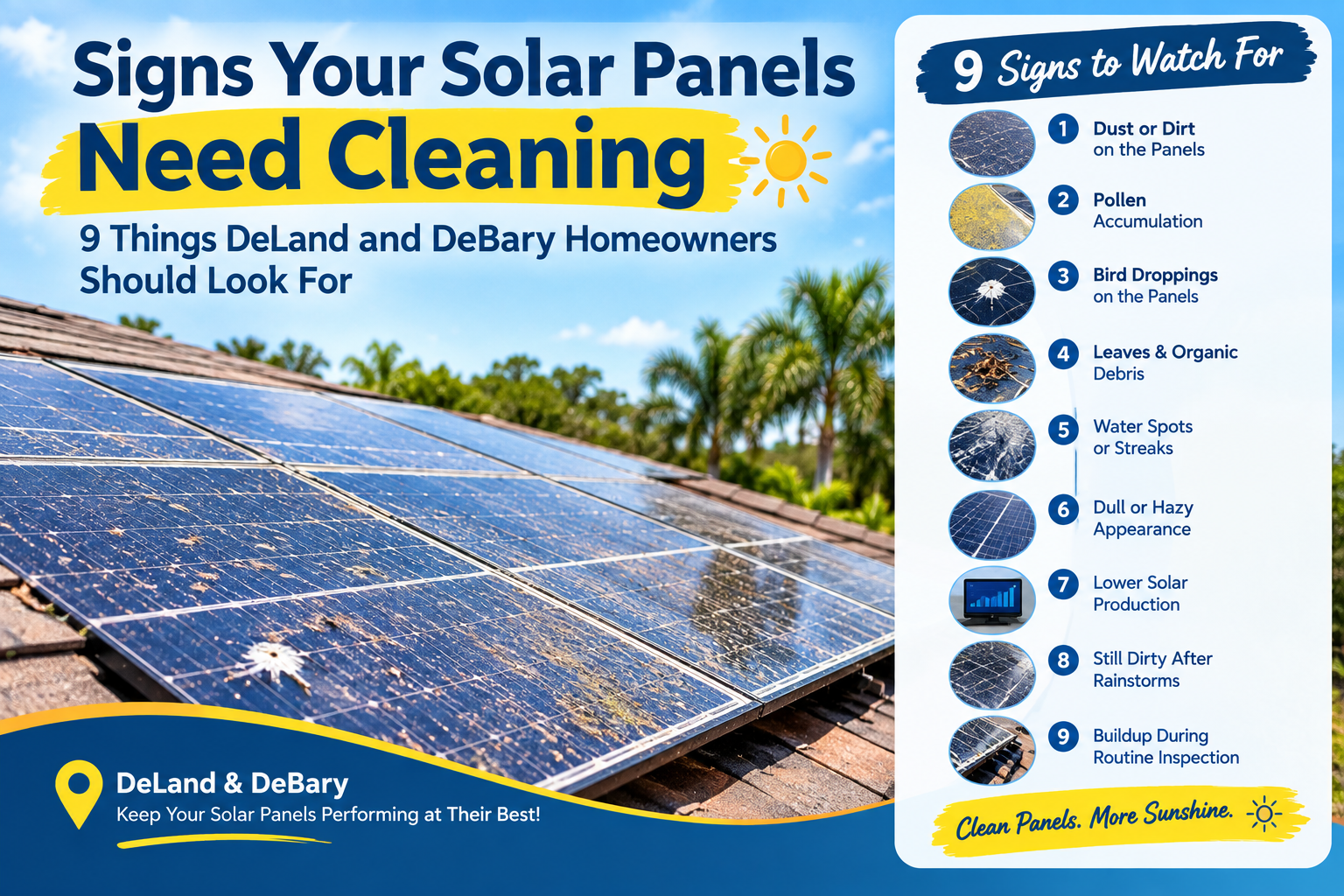
How to Tell If Rain Has Actually Cleaned Your Solar Panels
Homeowners can often get a general idea of their panels’ condition through a safe visual inspection from the ground or another secure location.
Look for signs such as:
- Visible dust or dirt
- A noticeable pollen film
- Bird droppings
- Water spots or streaks
- Leaves or organic debris
- Dirt collecting around panel edges
- Buildup that remains after multiple rainstorms
If the panels are difficult or unsafe to access, avoid climbing onto the roof simply to inspect or clean them. A professional assessment may be a safer option.
Can Dirt on Solar Panels Affect Solar Production?
Solar panels need access to sunlight to generate electricity. When dirt, pollen, bird droppings, or other debris covers part of the panel surface, it can reduce the amount of sunlight reaching that area.
The effect can vary depending on the type and amount of buildup, as well as the design and location of the solar system.
However, lower solar production does not automatically mean that dirty panels are the cause. Cloud cover, shading, seasonal changes, temperature, equipment problems, and other factors can also affect production.
If you notice an unexpected change in energy production, it is useful to consider the overall condition of the system rather than assuming dirt is the only explanation.
When Should Florida Homeowners Clean Solar Panels?
Instead of cleaning panels after every rainstorm, homeowners can look for signs that cleaning may actually be needed.
These signs may include:
- Visible dirt remaining after rainfall
- Significant pollen buildup
- Bird droppings on the panels
- Leaves or other organic debris
- Widespread water spots or residue
- Panels that have not been checked or cleaned for an extended period
- A location where accessing the panels is difficult or unsafe
The right cleaning frequency depends on the property’s surroundings, weather conditions, panel accessibility, and the amount of buildup.
For homeowners who need help with difficult-to-access or heavily soiled panels, professional solar panel cleaning can provide a safer alternative to attempting the work themselves.
Should You Clean Solar Panels After Every Rainstorm?
Generally, no.
Rain does not mean that solar panels need to be cleaned immediately afterward. In many cases, rainfall can remove enough loose dirt that no additional cleaning is necessary.
Instead of following a strict rule based only on rainfall, homeowners can check the condition of their panels periodically. If visible buildup remains after rain, cleaning may be worth considering.
A condition-based approach can help avoid unnecessary cleaning while still keeping an eye on the panel surface.
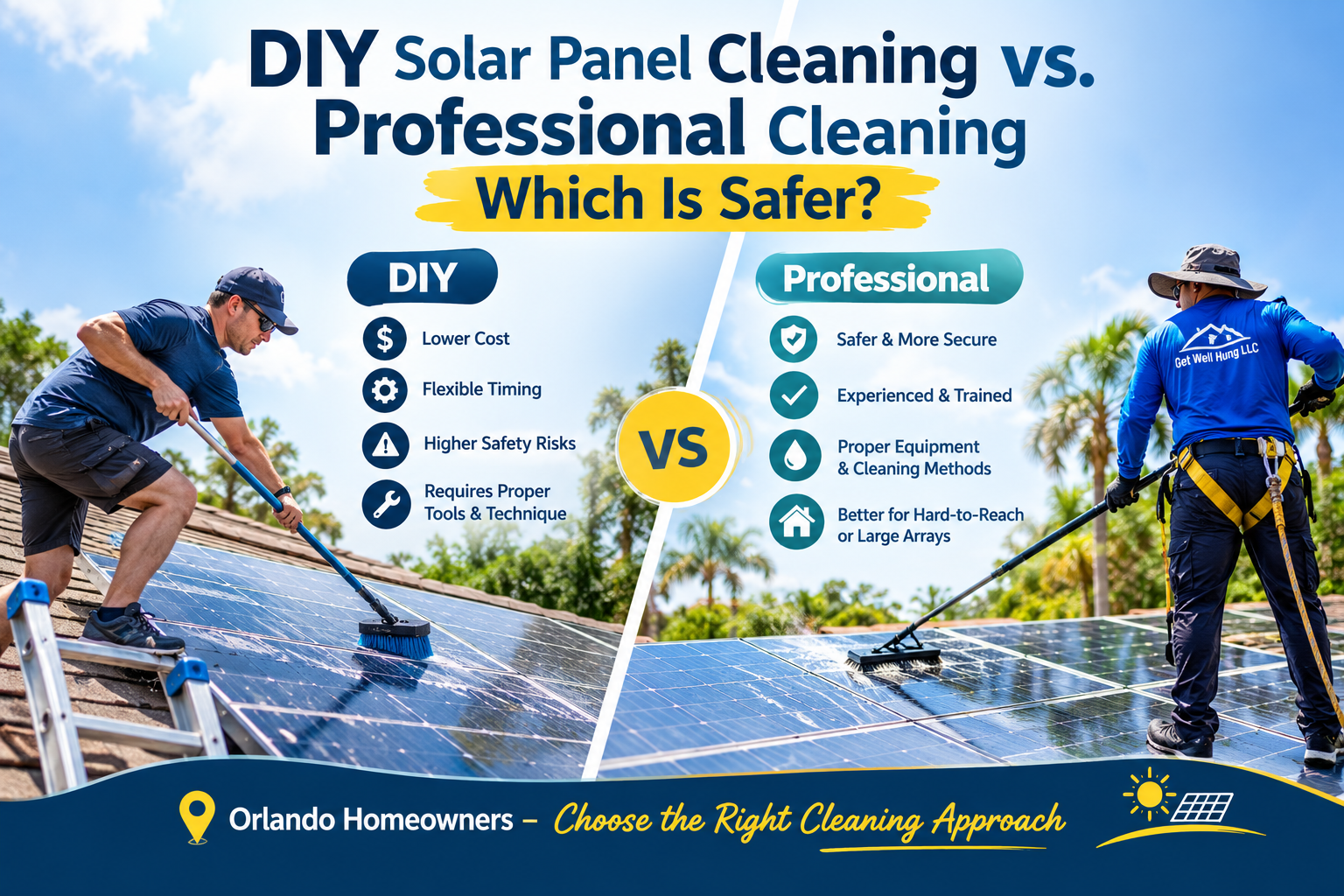
Is It Safe to Clean Solar Panels Yourself?
Cleaning solar panels may look like a simple task, but safety should be a priority.
If panels are installed on a roof or another difficult-to-reach location, climbing up to clean them can create a risk of slips, falls, or damage to the system.
Homeowners who decide to clean easily accessible panels themselves should use appropriate equipment and avoid abrasive materials or unsuitable cleaning products that could damage the surface.
If the panels are located in a difficult or unsafe area, professional cleaning may be a safer option.
How Professional Solar Panel Cleaning Works
Professional solar panel cleaning generally begins with an assessment of the system and its surroundings.
Depending on the property, this may include checking:
- Visible dirt and debris
- Pollen buildup
- Bird droppings
- Nearby trees and vegetation
- Panel accessibility
- Roof conditions
- The size and layout of the solar array
The appropriate cleaning method can then be selected based on the condition and accessibility of the panels. After cleaning, the panels can be visually checked to make sure remaining dirt or debris has been addressed.
For Florida homeowners dealing with persistent environmental buildup or difficult-to-access panels, professional solar panel cleaning can help maintain a cleaner panel surface without requiring homeowners to take unnecessary safety risks.
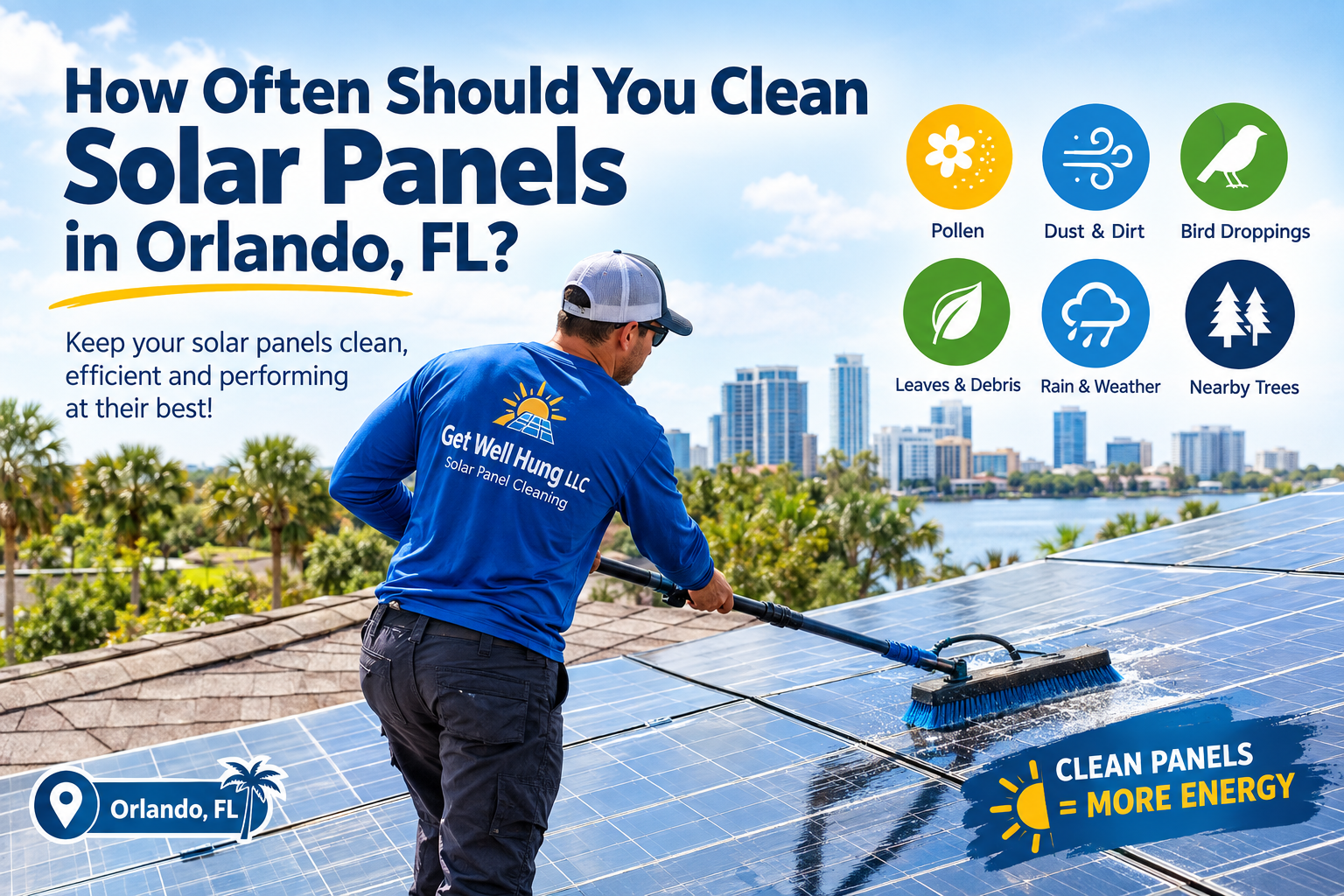
How Often Should You Check Your Solar Panels?
Regular visual checks can help homeowners notice buildup before it becomes more difficult to manage.
It may be useful to pay particular attention to the panels after:
- Heavy storms
- Long dry periods
- Periods of increased pollen
- Strong winds
- Changes in nearby trees or landscaping
There is no universal cleaning frequency for every solar installation. A home surrounded by trees may need more frequent attention than a system in an open area with less exposure to debris.
The most useful approach is to monitor the condition of the panels and consider cleaning when visible buildup becomes noticeable.
Conclusion
Rain can help rinse loose dust and debris from solar panels, but it does not guarantee that the panels are completely clean. Pollen, bird droppings, leaves, water spots, and other residue can remain after rainfall.
For Florida homeowners, the best approach is to pay attention to the condition of the panels rather than assuming that regular rain eliminates the need for cleaning. Periodic visual checks can help identify buildup and determine when additional cleaning may be appropriate.
When panels are difficult to access or have significant buildup, professional solar panel cleaning can provide a safer and more thorough option.
Get Well Hung LLC provides solar panel cleaning services for Florida homeowners who need assistance keeping their solar panels clean and maintained.
For more information, contact Get Well Hung LLC at (386) 444-5817.